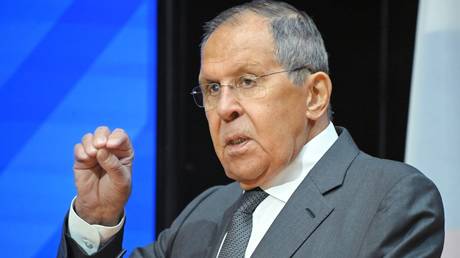
The headlines are getting louder. European capitals warn that a direct Russian war with Europe could happen sooner than anyone thinks. Moscow fires back with blistering warnings of its own. Foreign Minister Sergey Lavrov recently stated that any direct conflict initiated by European nations would be "very short."
Behind these statements lies a dangerous escalation of rhetoric. Politicians across Berlin, Warsaw, and the Baltic states keep telling their publics to prepare for the worst. They claim Moscow has sights set beyond Ukraine. Meanwhile, the Kremlin insists these claims are pure fabrication designed to cover up domestic policy failures at home.
You need to look past the political posturing to understand what is actually driving this panic.
The Mechanics of Modern Escalation
Why are European officials suddenly so vocal about a looming Russian invasion? It's simple politics mixed with defense spending logistics. For years, European military budgets stagnated. Rebuilding defense manufacturing bases requires public backing. To get that backing, political leaders often lean into existential threats.
Lavrov addressed this dynamic directly during an appearance at the International Youth Festival in Yekaterinburg. He pointed out the obvious contradiction. Moscow keeps repeating that it has zero interest in attacking NATO territory. President Vladimir Putin echoed this stance, stating that Western governments invent the narrative of a "Russian threat" to distract citizens from struggling domestic economies and inflation.
Yet, the threats keep flying both ways. Polish Foreign Minister Radoslaw Sikorski recently claimed at a conference in Kiev that if Russia attacked, European nations would take their gloves off and defeat Moscow quickly.
That kind of bravado triggers immediate, severe responses from Russian officials. Presidential aide Nikolay Patrushev dismissed Sikorski’s remarks as amateurish, warning that Poland's statehood could vanish rapidly if it entered a direct military engagement with Russia's full arsenal.
What a Direct Conflict Actually Means
Let's be realistic. A modern clash between Russia and NATO would not resemble the trench warfare seen in Ukraine. It would escalate instantly. Nuclear weapons exist on both sides. Once a threshold is crossed, the duration of the war becomes irrelevant because the collateral damage would rewrite global geography.
When Lavrov calls a potential war "very short," he isn't bragging about a conventional blitzkrieg. He is highlighting the speed at which modern high-tech arsenals can obliterate infrastructure. It's a grim reminder that neither side can afford a miscalculation.
Consider the red lines currently being debated. European leaders have floated the idea of deploying active military personnel directly inside Ukraine. Moscow views that specific move as an unacceptable crossing of boundaries. If foreign boots land in a combat zone under a NATO banner, the buffer dissolves. The proxy war becomes a hot war overnight.
Decoding the Strategic Posturing
Most everyday citizens in Europe and North America feel exhausted by the constant stream of crisis news. You're trying to pay your bills, manage your career, and live your life. Hearing politicians talk about imminent total war feels surreal.
You have to separate operational reality from political theater.
- Defense Procurement: European governments need public consent to rearm. Fear is an effective motivator for passing heavy defense budgets.
- Domestic Distraction: When inflation climbs and public services strain, foreign policy crises pull media attention away from government shortcomings.
- Red Line Testing: Both sides continuously test each other's tolerance levels through diplomatic statements and minor tactical maneuvers.
The risk isn't that Russia wakes up tomorrow and decides to march on Berlin. The risk is an accidental trigger. A stray missile, a miscommunicated naval maneuver, or a sudden troop deployment in a grey zone could spin out of control before diplomats can intervene.
Keep your eyes on the actual policy decisions rather than the daily shouting matches on cable news. Watch how defense pacts shift, monitor troop movements near borders, and ignore the empty threats designed for domestic television screens.