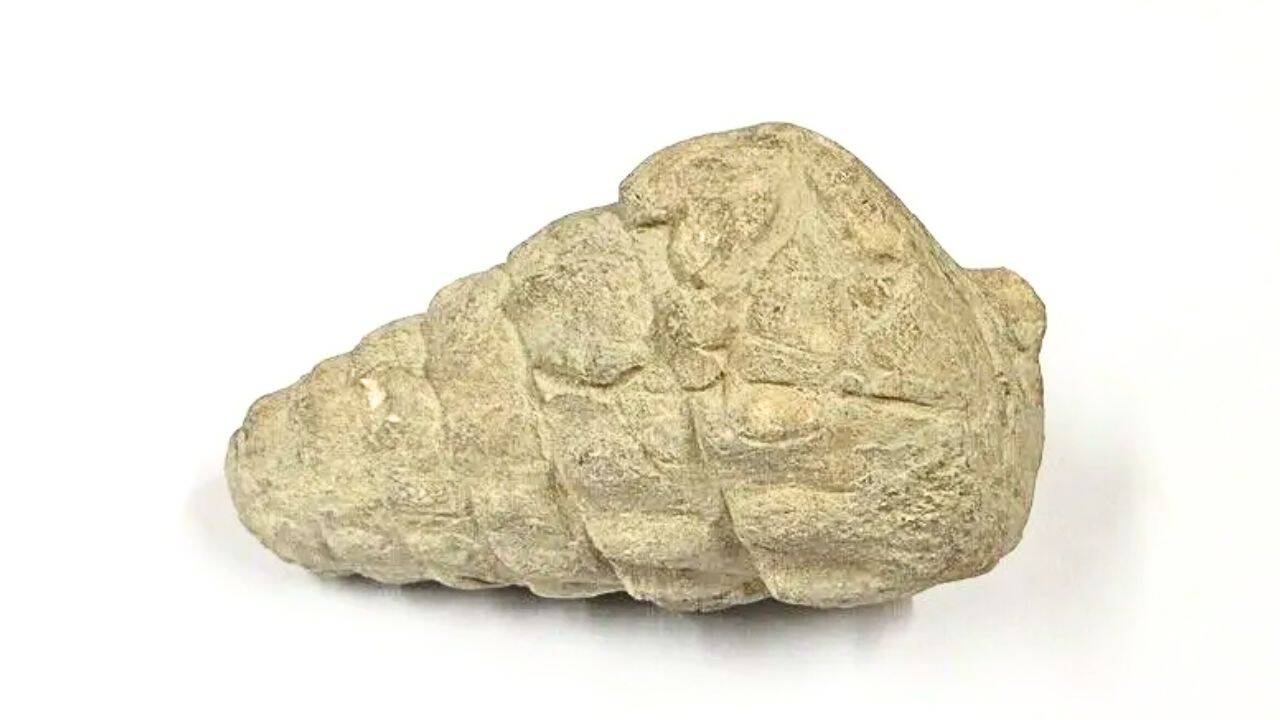
Archaeology constantly throws curveballs at us, but finding a 66-million-year-old sea snail fossil inside a 5,000-year-old human settlement takes the cake. Excavators working at the ancient site of Kulhoyuk in Ankara's Golbasi district didn't just dig up ordinary pottery fragments or stone tools. They stumbled upon a marine gastropod fossil that predates the people who lived there by millions of years.
If you are wondering how a fossil from the late Cretaceous period ended up in a Bronze Age settlement, you aren't alone. Archaeologists are wrestling with the exact same puzzle.
The Tethys Sea Connection
To understand why this discovery is turning heads, you have to look back at the region's deep geological history. Central Anatolia wasn't always dry land. Millions of years ago, the massive Tethys Sea stretched across parts of Eurasia.
The gastropod fossil dates back to the final phases of this ancient ocean, placing its age at roughly 66 million years old. Back then, the creatures forming these shells lived along shallow tropical and subtropical shores. When the seabed eventually shifted and folded into high-altitude plateaus, these fossils were left trapped in the rock strata miles away from any modern ocean.
So, how did a fossil locked away in ancient rock end up sitting pretty in a human settlement built five millennia ago?
Ancient Collectors and Curiosities
People love collecting cool rocks. Human behavior hasn't changed all that much over thousands of years.
Associate Professor Derya Yilmaz Tekin, who leads the excavation team on behalf of Ankara University and the Culture and Tourism Ministry under a program backed by the Turkish presidency, faces an intriguing dilemma. The most logical explanation is that the inhabitants of Kulhoyuk didn't form the fossil themselves. Instead, they walked out into the surrounding landscape, spotted an unusually shaped stone bearing the spiral imprint of an ancient sea creature, and decided to bring it back.
Think about that for a second. Bronze Age villagers carrying home a prehistoric souvenir.
Did they view it as a sacred object, a good-luck charm, or just a neat-looking rock they found while foraging or building? We don't have a written diary entry from the person who picked it up, but the psychological impulse to collect strange natural artifacts is deeply human. Long before modern paleontology existed, ancient communities encountered fossils and wove them into their own worldviews, often interpreting them as remnants of mythical creatures or divine markers.
Digging Deeper at Kulhoyuk
This isn't the first time Kulhoyuk has thrown researchers a curveball. Excavations at the site, which have been running actively since 2021, keep unearthing bizarre organic time capsules.
Just recently, archaeologists pulled the earliest-known seed remains of Ankara's signature 'Sevgi Cicegi', or Love Flower, out of a 4,000-year-old Hittite vessel. When you stack these finds together, a fascinating picture emerges of a community deeply connected to both its immediate agricultural surroundings and the strange geological anomalies hiding in the hills.
Archaeology is rarely just about broken plates and charred bones. It is about reconstructing the mental landscape of people who walked the earth long before us.
What This Means for Future Research
If you are tracking archaeological trends in Turkey, sites like Kulhoyuk are rewriting how we view ancient resourcefulness and curiosity. The presence of a 66-million-year-old gastropod reminds us that ancient populations interacted with deep geological time way more than we give them credit for. They weren't just surviving day-to-day; they were noticing, collecting, and wondering about the strange physical record left beneath their feet.
Keep an eye on the ongoing excavations in the Golbasi district. As field teams expand their trenches and analyze more soil samples, expect more artifacts that blur the line between human history and deep earth science.
Go outside, look at the rocks around you, and pay attention to what's beneath your boots. You might just be standing on someone else's ancient curiosity cabinet.


