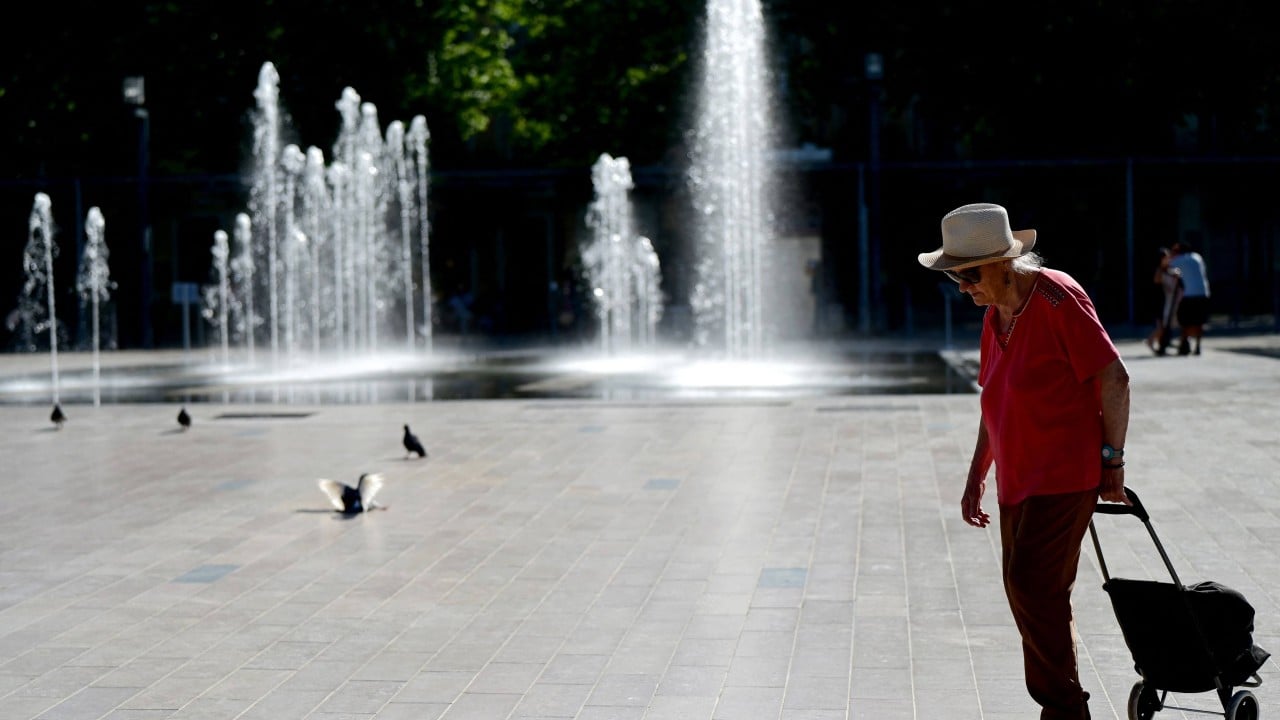
We need to talk about what just happened in France. It's easy to look at a headline about a record-breaking heatwave, see a big number, and move on. But the initial report from Santé Publique France is a quiet horror story. The agency announced that around 1,000 excess deaths occurred since June 24, when the country was baked by temperatures smashing past 40°C.
Here's the twist. These people didn't drop dead from heatstroke on a crowded beach or while hiking in the countryside. The sharpest increase in fatalities occurred right inside people's own homes.
When a heatwave hits, we tend to think of it as an outdoor problem. We worry about construction workers, tourists, or athletes. But the real danger is often silent, stationary, and trapped indoors behind concrete walls.
The Deadly Reality of the Urban Heat Island
The preliminary data from French health officials shows a terrifying trend. A staggering 85% of those 1,000 additional victims were aged 65 and older. The spike in mortality hit hardest in the Île-de-France region, the heavily concrete-and-asphalt zone that encompasses Paris and its sprawling suburbs.
This isn't a coincidence. It's a direct result of the urban heat island effect.
During the day, stone buildings, asphalt streets, and slate roofs absorb massive amounts of solar radiation. When night falls, rural areas cool down rapidly. Cities don't. They trap that heat, radiating it back out into the night air. For an elderly person living alone on the top floor of a classic Parisian apartment building without air conditioning, the apartment turns into an oven that never turns off.
Daily deaths shot past 1,400 on the worst days of the spike, a massive jump from the usual baseline of 900 to 1,000 daily deaths seen in April and May. The human body requires nocturnal cooling to recover from severe daytime heat stress. When the indoor temperature stays at 30°C or higher all night, the cardiovascular system has to work overtime just to keep the body's internal temperature stable. Eventually, for the vulnerable, the heart simply gives out.
Why This 1,000 Figure Is Just the Beginning
If you think 1,000 deaths sounds bad, I'll be honest with you. The final toll will be much higher.
Santé Publique France openly admitted that these initial numbers are unconsolidated and represent a significant underestimate. The early stats rely primarily on digital death certificates. Right now, those digital registries only capture about 60% of fatalities nationwide.
The current data misses a massive chunk of the population. It doesn't fully account for people who died in residential care facilities, nursing homes, or isolated rural houses where paperwork takes longer to process. It will take weeks, maybe months, of analyzing historical averages to calculate the true excess mortality of this event.
The Myth of the Modern Climate Strategy
Ever since the catastrophic 2003 European heatwave, which claimed over 15,000 lives in France alone, the French government has implemented color-coded alert systems and opened air-conditioned public halls in local town squares. During this latest spike, red alerts were triggered, and schools even set up cooled rooms for students taking exams.
But these measures assume that the most vulnerable people can, or will, leave their homes to find relief.
They don't. Loneliness and physical isolation are proving to be just as lethal as the temperature itself. An 80-year-old living alone with mobility issues isn't going to trek down three flights of stairs to sit in a municipal building. They stay in their apartments.
Health officials are begging for a shift toward active community solidarity rather than just passive public warnings. If you aren't actively knocking on the doors of isolated neighbors to check on them, a red alert banner on a television screen isn't going to save them.
Practical Steps to Protect Vulnerable People Right Now
Waiting for municipal systems to solve this isn't an option. If you have older relatives, neighbors, or friends living in urban environments, you need to use a targeted approach before the next high-pressure system parks itself over Europe.
- Create a forced hydration schedule: Older adults naturally experience a diminished sensation of thirst, meaning they won't drink water even when dangerously dehydrated. Don't ask them if they're thirsty. Physically bring them water or electrolyte fluids.
- Block the daytime sun entirely: Keep windows completely closed and shutters drawn during the hours when the outdoor temperature exceeds the indoor temperature. Open them only late at night if the outside air actually drops below the indoor apartment temperature.
- Evacuate during peak heat hours: If an indoor space lacks air conditioning and hits dangerous thresholds, physically move the occupant to a cooled commercial space like a supermarket or cinema during the late afternoon.
- Focus on active cooling: Applying damp towels to the skin and using a fan is far more effective than a fan alone. If the indoor air temperature is above 35°C, blowing dry, hot air directly at a person can actually increase heat stress rather than reduce it.
The mercury has dipped across France for now, giving the region a temporary reprieve. But summer isn't over, and the baseline global temperature is shifting. This isn't a freak weather anomaly anymore. It's the standard blueprint for summer, and our urban infrastructure isn't built to handle it.