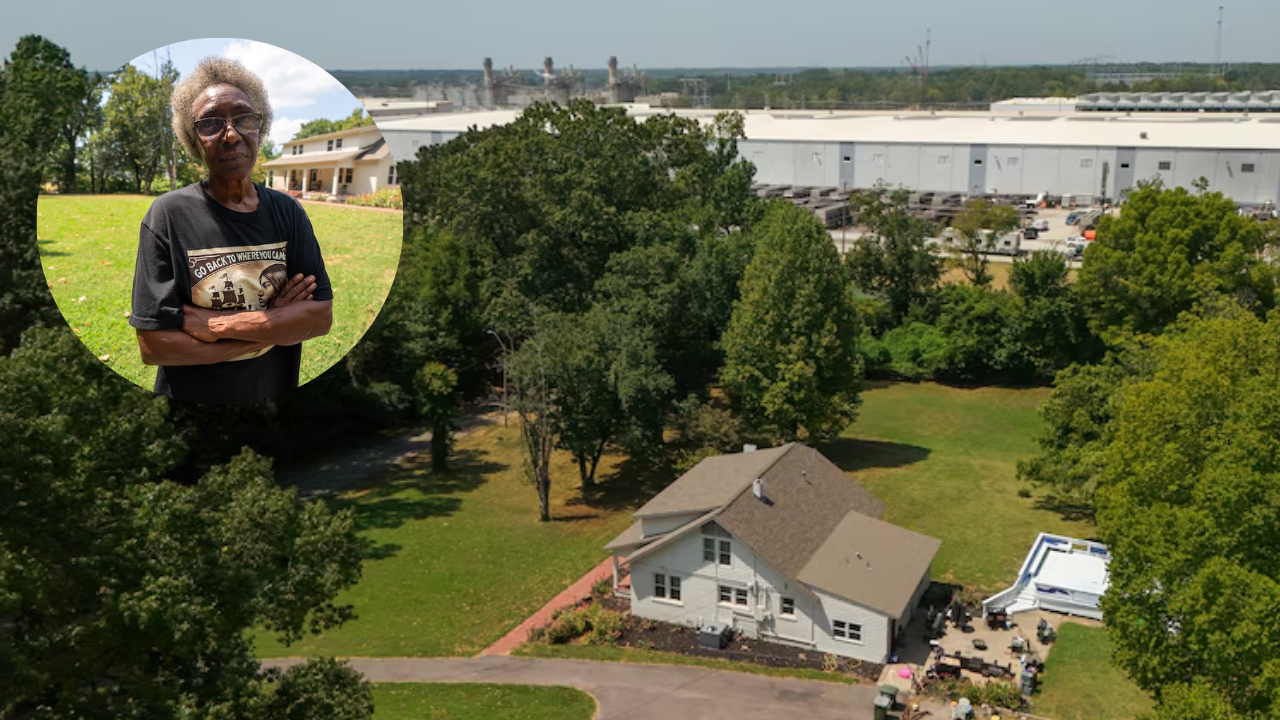
Loretta Thornton spent eleven years listening to the quiet rustle of trees outside her Memphis home. She called the place Serenity for a reason. As a Gulf War veteran managing post-traumatic stress disorder, that silence wasn't a luxury. It was medicine.
Then came the roar of jet engines, the smell of burning fuel, and a utility bill that suddenly doubled.
Next door, Elon Musk’s artificial intelligence company, xAI, had slammed together the world’s largest supercomputer inside a converted manufacturing warehouse. What happened to Thornton isn’t just an isolated neighbor dispute. It’s a preview of what happens when Silicon Valley’s unhinged compute race collides head-on with normal human neighborhoods.
The Reality of Living Next to Colossus
When xAI fired up the Colossus supercomputer in Memphis, tech commentators celebrated the record-breaking speed—bringing massive GPU clusters online in a staggering 122 days. They talked about Grok, training runs, and billions of parameters.
They didn't talk about what it sounds like at 3:00 AM.
Thornton described the soundtrack of her new reality as a perpetual flight line. To a veteran carrying the weight of Desert Storm, the constant industrial drone isn't background noise. It’s an invisible tripwire. Combine that low-frequency mechanical vibration with truck-sized gas turbines pumping out fumes that burn the throat, and you realize how fast "progress" can turn a sanctuary into a stress test.
And then there's the electric meter.
Critics on social media love to argue that an on-site turbine setup means data centers don't touch local residential power grids. Except regional utility dynamics don't work in clean little silos. When a facility demands hundreds of megawatts of continuous power—or triggers massive grid strain across the Tennessee Valley Authority (TVA) service area—local ratepayers feel the squeeze. Thornton’s power bill didn't just inch upward; it doubled.
The Myth of the Clean AI Revolution
We’ve swallowed the lie that digital intelligence is weightless. It lives in the cloud, right? It doesn’t burn coal or drink water or crowd your property line.
Except it drinks millions of gallons of water a day for cooling, and it relies on makeshift, unpermitted methane gas turbines when the local power grid blinks.
Federal and environmental watchdogs have spent the last year cornering xAI over its shortcut-heavy playbook in Memphis and northern Mississippi. The Southern Environmental Law Center and the NAACP stepped in after discovering dozens of gas-fired turbines operating without proper Clean Air Act permits. These aren't harmless little backup generators. They pump out nitrogen oxides, formaldehyde, and fine particulate matter into neighborhoods that are already fighting chronic air quality issues.
When you look at the map, a brutal pattern emerges. Tech giants pick industrial or working-class pockets where local oversight is weak, push infrastructure through at breakneck velocity, and leave residents to swallow the exhaust.
Why This Keeps Happening
You can’t blame Elon Musk alone for this specific brand of urban-industrial chaos. He just happens to be driving the bulldozer at top speed.
Across the United States, municipal zoning boards are completely outgunned. Cities are desperate for high-profile tech footprints, tax revenue, and the illusion of economic relevance. When a billionaire offers to drop a multibillion-dollar cluster into an empty shell of a building, local officials often sign off before asking what happens to the neighborhood aquifer or the power substation down the street.
By the time residents notice the hum in their walls or see the smog settle over the treeline, the concrete is poured and the GPUs are humming.
Over YouGov polls show that three-quarters of Americans don't buy the pitch that massive AI data centers are an unblemished public good. People are watching quiet residential streets turn into industrial staging grounds. More than two hundred local jurisdictions have already slammed the brakes with moratoriums, yet the sprawl continues wherever the local friction is lowest.
What You Should Take Away From This
If you live anywhere near a vacant big-box store, an old industrial park, or a major high-voltage transmission line, you aren't safe from the land grab.
- Watch the utility filings: Data center operators rarely announce themselves with a polite postcard. They operate through shell companies, hidden LLCs, and quiet zoning variances. Watch local utility board agendas for sudden jumps in megawatt allocation requests.
- Track the water and air permits: If a massive windowless warehouse suddenly gets security fences, heavy diesel traffic, and exterior concrete pads, check your state’s environmental quality department for emergency generator or water-tap permits.
- Don't wait for city hall to care: Grassroots coalitions like Protect Our Aquifer and local NAACP chapters have moved faster and harder than municipal councils in Tennessee. Waiting for politicians to preemptively protect your block is a losing strategy.
Loretta Thornton didn't sign up to host a multi-gigawatt brain trust for a chatbot in her backyard. Her home was named Serenity because she fought hard to find it.
The machine doesn't care what you call your house. It just needs more power, more water, and more room to grow.