You don't choose the infrastructure that keeps you alive when you are born into a refugee camp. It is just there, woven into the background like the dust and the concrete. For millions of Palestinians, the United Nations Relief and Works Agency for Palestine Refugees in the Near East, known universally as UNRWA, functions as the baseline of existence.
From the first vaccine shot administered in a crowded clinic to the desks crammed inside packed concrete schools, the agency has mirrored the trajectory of Palestinian life for over seven decades. Yet, political corridors in Washington and Jerusalem treat this institution as a disposable bureaucratic hurdle rather than an irreplaceable lifeline. Cutting off UNRWA isn't just a political maneuver. It's a calculated strike against the foundational framework keeping millions from total collapse. If you enjoyed this post, you should read: this related article.
The Institutional Memory of Displacement
History doesn't live only in textbooks; it lives in ledger books and generational registries. Established in 1949 following the mass displacement of the Nakba, UNRWA was mandated to provide emergency relief to refugees. Grandparents who walked off their lands in 1948 passed down ration cards like heirlooms. Those cards proved receipt of flour, oil, and blankets, but they also preserved an official record of property and provenance.
When modern politicians argue that the agency should be dissolved to "solve" the refugee crisis, they confuse cause and effect. Eliminating the agency doesn't eliminate the refugees. It erases the institutional memory of their displacement. It strips away the documentation that anchors millions to their right of return. For another angle on this development, refer to the recent coverage from The Guardian.
Beyond Aid: The Social Fabric of Refugee Camps
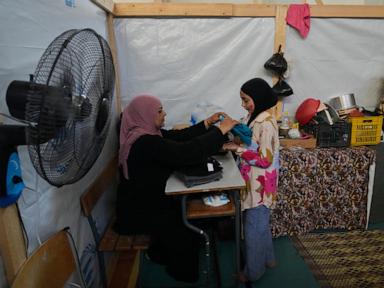
Outsiders often misunderstand what the agency actually does. They picture temporary tent camps handing out canned beans. The reality is far more structural. Over decades, UNRWA evolved into a de facto state provider in the absence of a sovereign government. It runs entire educational systems, municipal sanitation networks, and primary healthcare clinics.
Think about what happens when you pull that rug out.
- Schools serving hundreds of thousands of children shut their doors.
- Chronic disease management programs for diabetes and hypertension vanish overnight.
- Thousands of local teachers, doctors, and sanitation workers lose their livelihoods in economies already choked by blockades.
In places like Gaza and the West Bank, the agency represents the middle class. Teachers, nurses, and administrators draw their salaries from its payroll, circulating capital through localized micro-economies. Dismantling this network triggers an immediate economic depression on top of an already catastrophic humanitarian crisis.
The Geopolitical Strategy Behind the Ban
The push to outlaw UNRWA operations—backed by recent legislative bans in Israel and ongoing pressure from Western allies—operates on a specific logic. The objective is straightforward: blur the status of Palestinian refugees until they vanish from international legal definitions.
By targeting the agency's compounds in East Jerusalem, restricting its visas, and freezing donor funding at critical moments, critics hope to transfer refugee responsibilities to host countries or vague international bodies. But host nations cannot absorb millions of registered refugees, and alternative NGOs lack the scale, mandate, or historical trust required to manage a population of this size.
This strategy relies on exhaustion. The goal is to wear down generations until survival itself feels impossible, forcing quiet assimilation or desperate migration.
Refusing to Let the Lifeline Be Severed
For Palestinians, imagining a future without the agency is like imagining a landscape without water or sky. It has educated generations of writers, doctors, and engineers who went on to build lives against staggering odds. To let it vanish under the weight of geopolitical hostility is to accept the permanent erasure of Palestinian rights.
The attacks on the organization will continue to ramp up, driven by those who want the refugee file closed once and for all. But as long as millions rely on its classrooms and clinics to wake up and face tomorrow, the fight to protect this infrastructure remains non-negotiable. Stop treating the agency as an expendable policy debate. Recognize it for what it is: the last structural barrier standing between a displaced people and total oblivion.