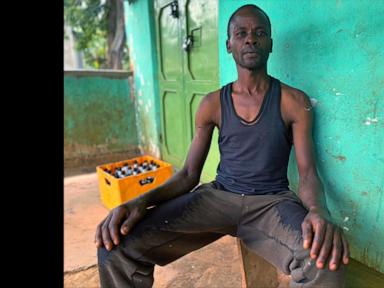
Climate change is rewriting the rules of survival in sub-Saharan Africa, and traditional rainmakers are paying for it with their lives. When the skies refuse to open or unleash destructive floods, desperate subsistence farmers aren't just blaming meteorologists. They are hunting down local spiritual leaders, accusing them of failing in their ancient duties or intentionally withholding rain.
This isn't an abstract cultural conflict. In South Sudan, at least two traditional rainmakers have been murdered in the span of two years. Men abducted Albino Lobillia and buried him alive during a severe dry spell. Just a year prior, another rainmaker named Solomon Oture suffered the exact same fate in a remote mountain village.
Across the border in Uganda, the violence looks different but remains brutal. David Nabutsilili, a 45-year-old rainmaker in Namatsokha, was chased down hills by an angry mob until he fell and broke his femur. His crime? The farmers who paid him got too much rain, flooding their vegetable gardens.
The Dangerous Transaction of Modern Rainmaking
Why are these traditional figures facing such extreme hostility now? The answer lies in money and shifting weather patterns.
Rainmakers have operated across parts of Uganda and South Sudan for generations. Communities rely on them to perform rituals, use herbs, and call upon deities to summon or block precipitation. Historically, this relationship was based on spiritual trust. Today, it has become commercialized.
People pay rainmakers fees ranging from a modest token of $13 up to $260. For instance, Nabutsilili was paid $260 to keep the rain away during a political campaign visit by Ugandan President Yoweri Museveni. When it didn't rain that day, it looked like a success. But when economic survival is on the line, a paid service creates an absolute expectation of results.
When those results don't happen, the financial transaction turns toxic. Farmers demand refunds. Rainmakers often spend the money or refuse, and the conflict escalates quickly.
The Reality of Erratic Weather
The climate is breaking down, and local communities don't always understand the science behind it. Data from the REACH Initiative and humanitarian groups shows that average annual rainy days in South Sudan's Kapoeta region plummeted from 90 in the 1980s down to just 46 by the mid-2010s.
When rain does arrive, it doesn't fall steadily. It comes in violent, destructive bursts that wash away crops, followed by punishing droughts. Millions of people depend entirely on subsistence farming to feed their families. Every lost harvest means hunger.
Local government officials admit that communities lack proper awareness of climate change. Instead of recognizing global atmospheric shifts, scared residents look for someone tangible to blame. Rainmakers become convenient scapegoats.
Unlike priests or traditional medicine men who command steady community respect, rainmakers occupy a precarious gray area. Some villagers even suspect them of being malicious actors who can control the weather out of spite or use it to punish neighbors during local disputes.
Surviving in the Crosshairs
Despite the danger, rainmakers like Kilindon Simiyu keep trying. Simiyu openly admits the work has gotten harder. He notes that the powers don't yield the same predictable results they used to because the seasons themselves have broken down.
When expectations fail, Nabutsilili packs up and flees his home temporarily to stay safe until the neighborhood anger cools down. He views failures as part of the natural order dictated by higher powers, noting that a bad outcome doesn't stop him from trying again next time.
Education and climate adaptation infrastructure remain scarce in these rural pockets. Until communities understand that carbon emissions and shifting weather patterns drive their agricultural crises rather than local rituals, the region's rainmakers will remain trapped in the crosshairs of a warming planet.
Protecting these vulnerable communities requires immediate investment in resilient agricultural education, drought-resistant seeds, and local climate awareness programs to redirect blame away from spiritual leaders and toward actionable survival strategies.


