Everybody loves a good apocalyptic financial story. Mention de-dollarisation at any dinner party or market conference, and you will instantly attract a crowd convinced the greenback is about to collapse under its own weight. It makes for dramatic headlines. It feeds neatly into narratives about shifting global superpowers.
The reality is far more stubborn. The US dollar isn't crashing out of global dominance anytime soon, but pretending that nothing is changing is a mistake.
If you look past the noise, a slow-motion fragmentation is happening right now. Central banks are quietly changing how they hold wealth, and major trading blocs are testing alternative payment rails. The structural pillars supporting the dollar remain massive, yet the cracks around the edges are widening. Let's look at what is actually happening behind closed doors.
The Myth of an Instant Replacement
Critics love to point out that the dollar's share of global foreign exchange reserves has dropped significantly over the past few decades. That part is true. According to long-term economic data, central banks hold a smaller percentage of their reserves in greenbacks today than they did in the late twentieth century.
Yet people forget a fundamental truth of international finance. There is no substitute for depth and liquidity.
When a central bank needs to park billions of dollars securely overnight, it cannot simply drop that cash into any local market. It needs massive, liquid debt markets where billions move without blinking. American financial markets offer a depth that Beijing, Tokyo, or Frankfurt simply cannot match right now.
Think about it from a treasurer's perspective. If you are managing foreign exchange reserves for a multi-billion-dollar sovereign wealth fund, you don't park your capital in an experimental currency that restricts capital outflows. You buy US Treasuries. Until a credible, open, and hyper-liquid alternative emerges, the dollar stays on top by default.
Where the Real Shift Is Happening
While a wholesale replacement of the greenback is a fantasy, bilateral trade is telling a very different story. Governments tired of running into American economic sanctions are routing around the traditional system.
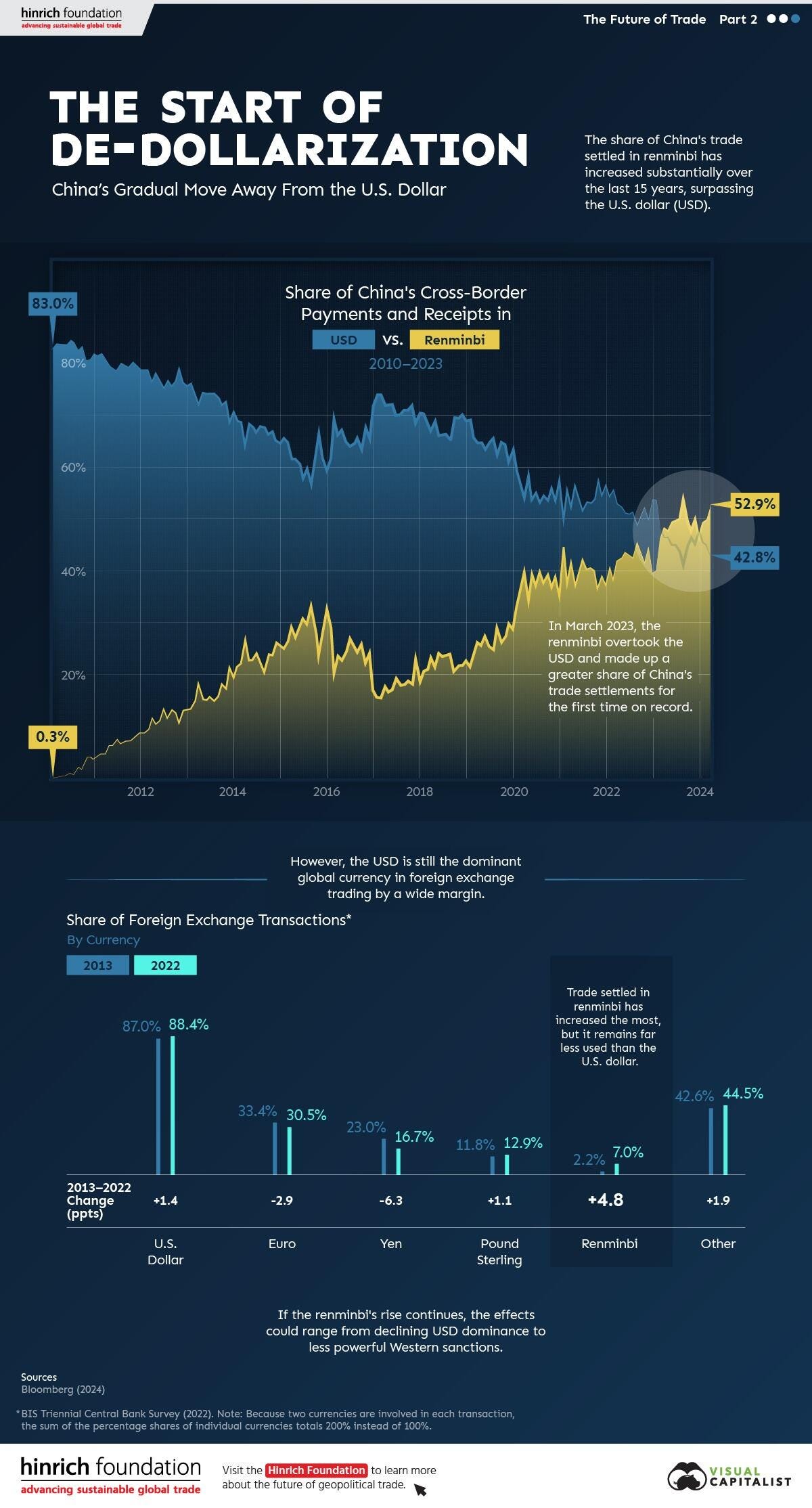
Consider how trade invoicing has evolved. China has dramatically increased the share of its goods trade settled in yuan, climbing toward nearly 30 percent in recent years. Meanwhile, nations within the BRICS bloc are actively building local-currency settlement mechanisms. Russia and its trading partners conduct the vast majority of their transactions using national currencies.
This isn't happening because the yuan or the ruble has suddenly become a universal safe haven. It is happening because weaponising the SWIFT network and dollar clearing infrastructure gave foreign governments an urgent incentive to find insurance policies. When nations realize their cross-border payments can be switched off by a foreign power overnight, they build backup roads.
The Gold Accumulation Signal
You don't have to guess how central banks feel about the long-term safety of fiat currency. You just have to look at what they are buying.
Data from the World Gold Council shows record numbers of central banks consistently boosting their gold reserves. When monetary authorities pivot toward physical gold, they are hedging against future systemic shocks. They are looking at rising US debt loads, political polarization in Washington, and erratic economic policies, and they are buying physical insurance.
It is a silent vote of no confidence in the long-term stability of western fiscal governance, even if they continue using dollars for daily trade out of sheer necessity.
What This Means for Your Strategy
If you are running an international business, investing across borders, or managing personal wealth, don't plan for a sudden collapse of the global monetary order. Prepare for a multipolar world instead.
- Diversify your currency exposure: Don't assume your cash is safe sitting entirely in one jurisdiction or currency.
- Watch regional payment rails: Alternative cross-border clearing systems are gaining traction across Asia and the Middle East, altering transaction costs.
- Ignore the doomsday extremes: The dollar won't vanish tomorrow, but its absolute monopoly is eroding into a fractured landscape.
The shift is messy, slow, and uneven. Stop looking for a dramatic crash and start watching the quiet accumulation of alternatives.