Nature has a weird way of building panic rooms.
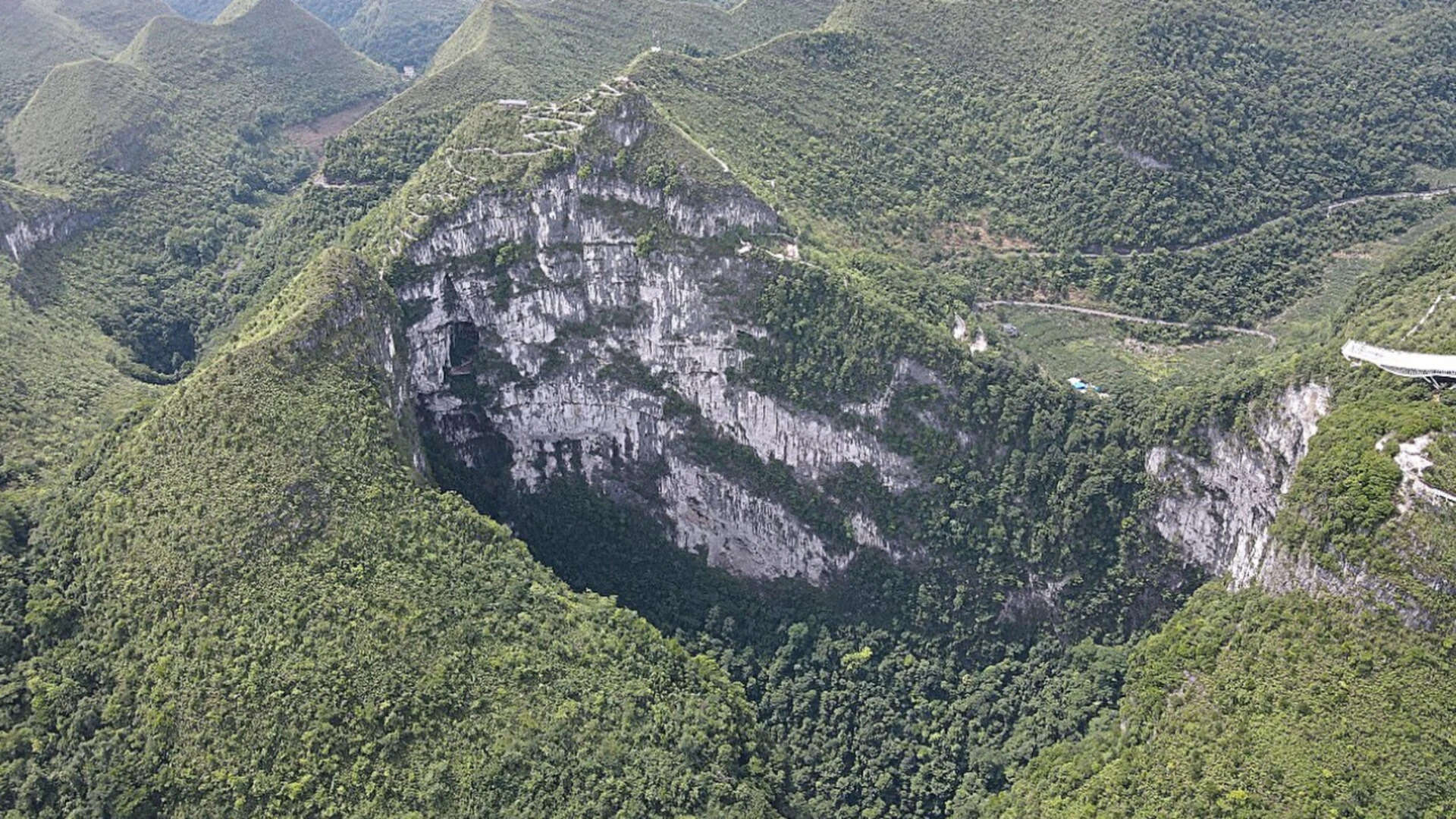
In the dramatic karst landscapes of southwest China, giant sinkholes known as tiankengs—or "heavenly pits"—drop hundreds of meters into the earth. They hide pristine, prehistoric forests that look like something straight out of a fantasy novel. For decades, ecologists figured these deep pits were the ultimate safe havens for rare species escaping the harsh realities of climate change.
It turns out that isolation comes with a brutal price tag.
A fascinating genomic study published in Current Biology by researchers at the South China Botanical Garden and the Guangxi Institute of Botany shows that these geological wonders are double-edged swords. While they shield the endangered Magnolia aromatica tree from blistering heat and severe droughts, they also block genetic exchange.
Basically, the very walls that protect these ancient trees are trapping their future.
The Dark Side of Natural Fortresses
If you walk along the surface of the limestone karst regions in Guangxi, Guizhou, or Yunnan, the environment is brutal. It's hot, dry, and heavily fragmented. But look down into a tiankeng, like the massive Xiaozhai Tiankeng which plunges 626 meters down, and you see an entirely different world. The bottom is cool, insanely humid, and heavily shaded.
For Magnolia aromatica, an endangered evergreen tree, this microclimate is perfect.
The research team, led by scientists like Kang Ming and Zhu Xian-Liang, mapped out the genome of 112 Magnolia aromatica trees across 26 distinct populations. When they looked at the big picture, the sinkholes seemed to do their job. The trees near these pits kept up a decent level of overall genetic diversity.
But when the researchers zoomed in on the populations trapped strictly inside the deep pits, the data told a darker story.
The isolated sinkhole trees showed significantly lower genetic diversity and a much higher accumulation of harmful genetic mutations compared to their neighbors living on the surface. Because the physical walls of the tiankengs stop seeds and pollen from traveling freely, these deep-dwelling trees are essentially forced into centuries of inbreeding.
They don't get fresh genetic material. Without it, their ability to adapt to future environmental shocks drops fast.
Hooked on the Shade
The study also uncovered a bizarre evolutionary trade-off. Life in the deep pits means dealing with extreme light deficiency. Over generations, the sinkhole-interior trees adapted their genes for photosynthesis and carbon fixation specifically to handle near-total darkness.
To see just how dependent these trees are on their dim sanctuary, the scientists ran controlled shading experiments on seedlings.
The results were stark. Seedlings sourced from the sinkholes died quickly when exposed to full, direct sunlight. However, they thrived when scientists cut the light by 50% to 90%. They actually performed best in deep shade, where less than 10% of natural sunlight could reach them.
This extreme adaptation explains why Magnolia aromatica dominates the damp floor of a tiankeng. But it also means they are evolutionary prisoners. They can't just climb out or migrate if conditions down below change. They are fundamentally hooked on the shade.
Why Traditional Conservation Tactics Fail Here
Most conservation programs focus heavily on drawing a line around a unique habitat and calling it a protected reserve. This research proves that strategy won't work for karst ecosystems.
If we only protect the bottoms of the sinkholes, we are essentially managing a slow, genetic decline. Climate change modeling shows that the edges of these sinkholes are high-risk zones where the lag in adaptation will hit hardest. As surface temperatures keep shifting, these trees will need to evolve, but their internal mutation load is projected to keep climbing.
What works in theory—saving the physical bunker—fails in practice if the inhabitants can't ever leave to swap DNA.
Actionable Next Steps for Karst Conservation
To keep Magnolia aromatica and similar prehistoric relics from running into an evolutionary dead end, conservation strategies need a massive overhaul.
- Protect the Surface Corridors: Conservation boundaries must expand beyond the physical lips of the tiankengs. Protecting fragmented forest patches on the surface between sinkholes gives birds and winds a chance to carry pollen and seeds across different populations.
- Implement Assisted Gene Flow: Geneticists and field teams need to manually bridge the geographic gap. Collecting seeds from surface-dwelling trees and carefully planting them inside the sinkholes—and vice versa—can artificially introduce the genetic variation these isolated pockets desperately lack.
- Prioritize Sinkhole Edge Management: Focus restoration efforts on the transition zones at the edges of tiankengs. Buffer zones should be replanted with native canopy trees to extend the shaded microclimates outward, giving the magnolia seedlings a fighting chance to migrate naturally.
Saving an endangered species requires more than keeping it alive in a natural museum; it requires maintaining the genetic pathways that allow it to keep evolving.