Tensions on Europe's southern doorstep have officially reached a breaking point.
When thousands of migrants surged across the border into Ceuta—Spain's tiny North African enclave—it wasn't just a localized immigration flare-up. It triggered a chain reaction. Now, nationwide demonstrations have swept across mainland Spain, leaving residents trapped in a pressure cooker of political anger, security failures, and deep frustration with Prime Minister Pedro Sánchez’s government.
If you look past the official press releases from Madrid, you'll find a community that feels entirely abandoned.
The Reality on the Ground in Ceuta
Ceuta spans a mere 18 square kilometers. Squeezed against Morocco, it's geographically isolated and chronically vulnerable. When a massive influx of people swam or walked across the border in a chaotic rush, local infrastructure cracked instantly.
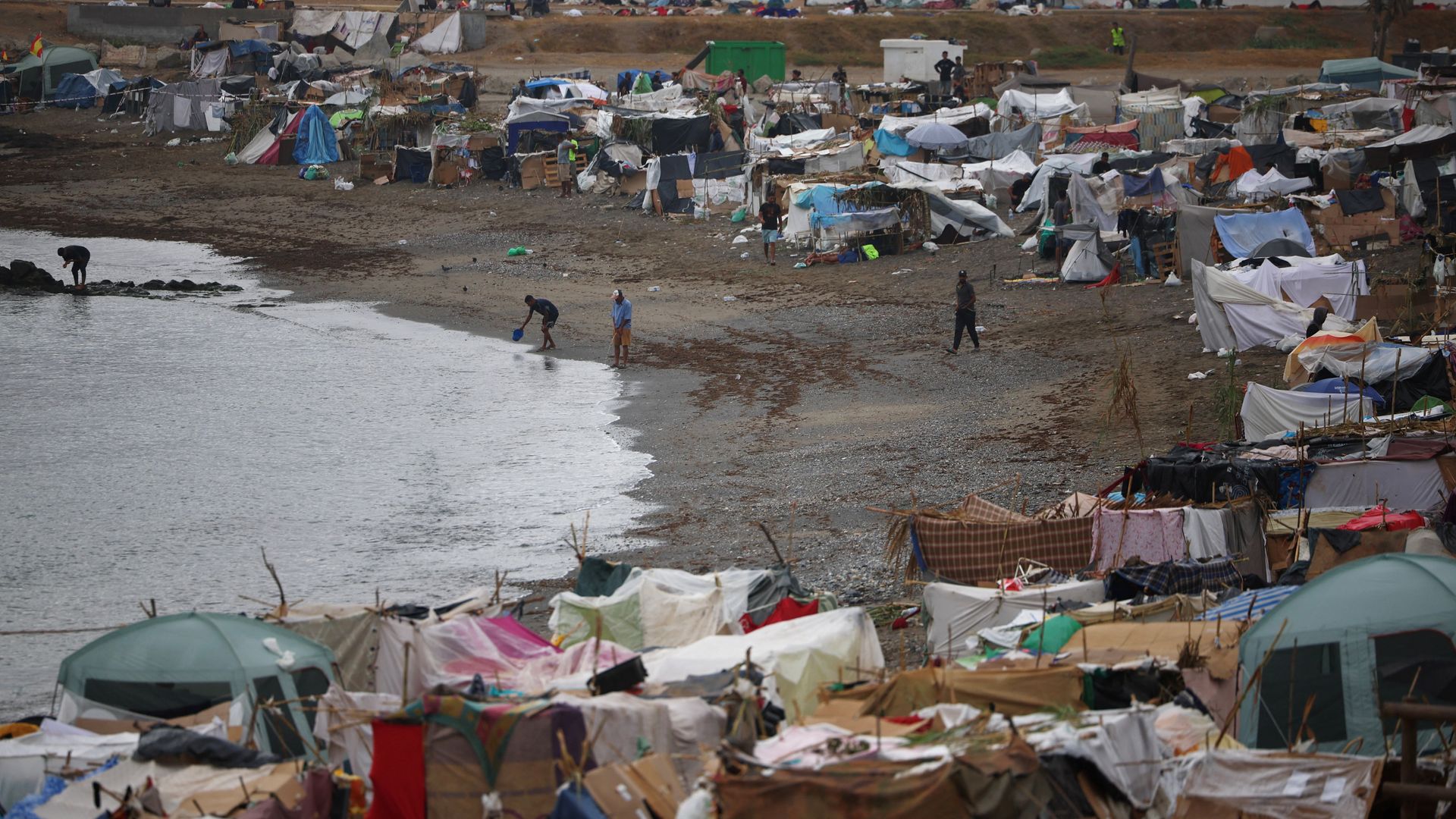
Thousands of migrants remain stranded in the territory, camping on beaches and sleeping rough. Local authorities estimate the stranded population sits well above 10,000, while the central government downplays those figures.
People are exhausted. Schools are trying to reopen, public services are overwhelmed, and public order is fraying. When a military vehicle carrying four soldiers was recently ambushed by a group of migrants throwing stones, the incident laid bare how fragile security has become. Residents aren't just worried about housing or hygiene anymore. They're scared.
Why Mainland Spain Ignited
The anger didn't stay contained within Ceuta's borders. Protests erupted nationwide as anti-migrant groups and frustrated citizens took to the streets.
Demonstrators are demanding tougher border controls, immediate deportations, and the resignation of Pedro Sánchez. Opposition leaders like Alberto Núñez Feijóo of the Popular Party have slammed Madrid's response as dangerously slow, pointing out that warnings from intelligence services about a potential mass crossing went unheeded.
The political fallout is massive. Conservative and far-right factions are capitalizing on the public's anxiety, turning migration policy into a weaponized political battleground ahead of upcoming elections.
Local Pleas for Sanity
Amid the political noise and street clashes, local leaders in Ceuta are begging people to cool down.
Kissy Chandiramani, the city's finance councillor, put it bluntly when speaking to radio station SER: tension is dangerously high because Madrid offers no real solutions, but hostility and street brawls won't fix the crisis either. Protesters blocking Red Cross vehicles or clashing with police on public beaches only add chaos to an already impossible situation.
Madrid has tried to bandage the wound by approving 25 million euros in emergency funding for unaccompanied minors and establishing a new "single command" structure led by Territorial Policy Minister Ángel Víctor Torres. Justice Minister Félix Bolaños insists that authorities are working nonstop to restore normality.
For the people living through the crisis every day, those promises sound empty.
Border policy can't just be managed through distant bureaucratic adjustments while frontline towns bear the entire weight. Until tangible, long-term security and diplomatic agreements are enforced between Spain and Morocco, towns like Ceuta will continue to pay the price for political gridlock.