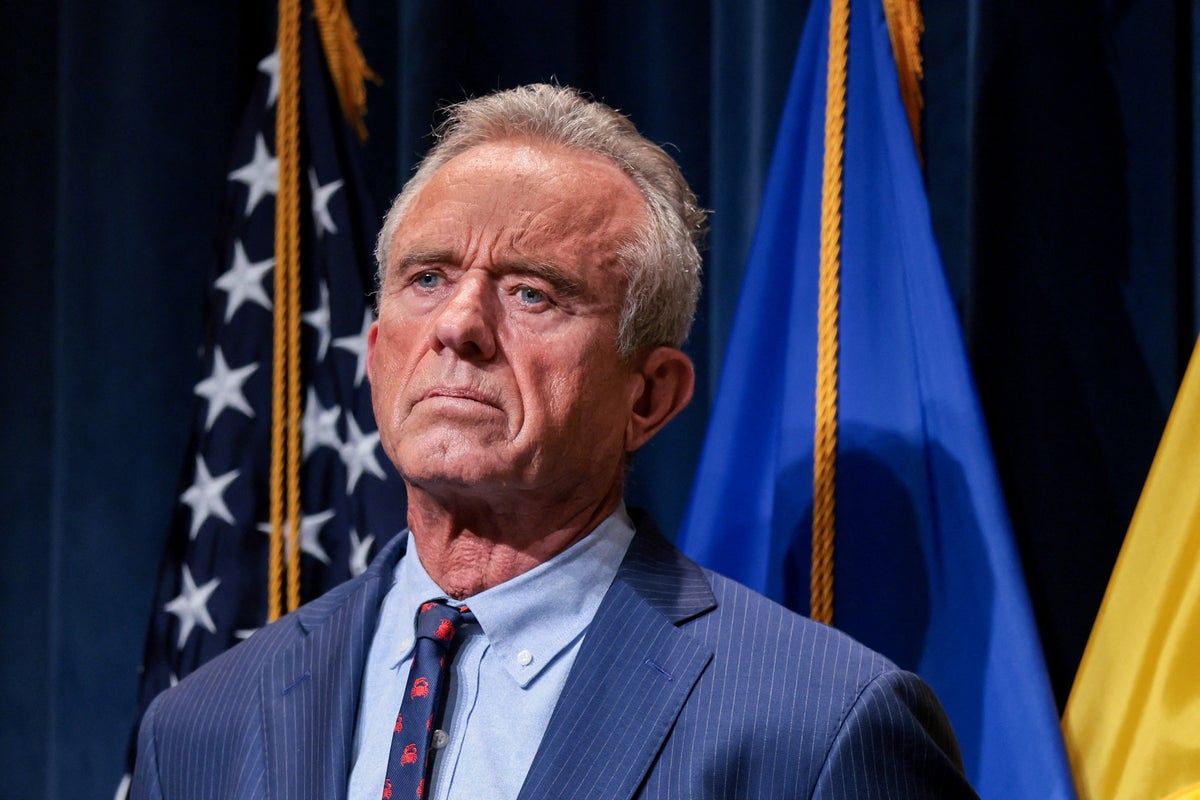
When the U.S. Centers for Disease Control and Prevention altered its long-standing stance on vaccines and autism, it didn't do so because of a new breakthrough study. There was no sudden scientific revelation or clinical trial that flipped decades of research on its head. Instead, Health and Human Services Secretary Robert F. Kennedy Jr. personally directed agency staff to rewrite the page to align with his personal views.
The move sent shockwaves through the medical world. For decades, public health officials relied on exhaustive, large-scale studies involving millions of children across multiple countries to state a clear fact: routine childhood immunizations don't cause autism spectrum disorder. Overnight, the language on official government servers shifted from definitive reassurance to calculated doubt.
If you're wondering how a government agency's website can change its guidance without new evidence, you're not alone. Here is what actually happened behind the scenes, why medical experts are outraged, and what parents need to know about the science.
What Changed on the CDC Autism Webpage
The revised webpage made headlines when visitors noticed striking edits to its core statements. Previously, the CDC plainly stated that no link exists between vaccine ingredients and autism spectrum disorder. The updated text declared that "The statement 'Vaccines do not cause autism' is not an evidence-based claim".
The site went further by claiming that public health agencies ignored research supporting a potential link. To make matters weirder, the headline stating "Vaccines do not cause autism" remained on the page, but it now carried an asterisk.
That asterisk points to a footnote explaining a political compromise. Louisiana Republican Senator Bill Cassidy, a physician, had conditioned his confirmation vote for Kennedy on the promise that the CDC would not remove the explicit statement that vaccines don't cause autism. Kennedy kept the literal words on the screen, but added text surrounding them that directly undercut their meaning.
The Flaw in the Technicality Argument
Science doesn't operate on absolute absolute proof of a negative. That's a fundamental rule of logic. You can't prove that invisible, non-interactive tea cups aren't orbiting Jupiter right now, but that doesn't make their existence plausible.
Prominent vaccine expert Dr. Paul Offit pointed out that using a statistical technicality to assert "we haven't disproven every imaginable scenario" isn't sound science. By that logic, the CDC could post that science hasn't technically disproven a link between autism and chicken nuggets.
When researchers study hundreds of thousands of kids over decades and repeatedly find zero correlation between vaccination and autism rates, that's as close to a proven negative as science ever gets. Dismissing that mountains-high pile of data because of hyper-specific theoretical edge cases isn't rigorous. It's moving the goalposts.
How Career Scientists Were Bypassed
Internal reactions inside the agency were swift and bitter. Standard protocol for updating public health guidance involves rigorous multi-level reviews by subject-matter epidemiologists, statisticians, and clinical specialists.
In this case, CDC scientists woke up to find the edits already live. Former top CDC officials who recently left the agency, including Dr. Debra Houry, confirmed that career staff were completely bypassed during the edit. Dr. Daniel Jernigan noted that the leadership was shifting from "evidence-based decision making to decision-based evidence making".
When political appointees overwrite expert consensus on public-facing health portals, the immediate casualty is institutional credibility. Medical organizations like the Autism Science Foundation and the American Academy of Pediatrics immediately condemned the changes, warning that sowing unfounded fear hurts children by lowering immunization rates against deadly, preventable diseases like measles and polio.
What Science Actually Tells Us About Autism Causes
Autism is a complex neurodevelopmental condition with deep genetic roots. Large twin studies show that genetics account for 60% to 90% of autism risk. Researchers have identified hundreds of specific genes and genetic variations tied to ASD.
Environmental factors do play a role, but scientists look at things happening in early fetal development during early pregnancy—not routine infant shots given months or years after birth. The spike in reported autism cases over the past few decades is overwhelmingly driven by expanded diagnostic criteria, earlier screening tools, and broader awareness, as highlighted by extensive CDC monitoring data.
Actionable Steps for Navigating Health Guidance
When official websites become politically contested spaces, finding trustworthy health facts requires looking at consensus across independent medical bodies.
- Rely on professional medical associations: The American Academy of Pediatrics, the American Medical Association, and international bodies like the World Health Organization maintain strict peer-reviewed standards independent of single-appointee directives.
- Talk directly to your pediatrician: Pediatricians treat real patients daily and can explain safety data, ingredient breakdowns, and individual child health needs without political spin.
- Check peer-reviewed medical literature: High-quality scientific data sits in journals like The Lancet, NEJM, and JAMA, where methodology must pass rigorous independent expert scrutiny before publication.
- Focus on primary genetic research: Look to organizations like the Autism Science Foundation for updates on genetics, early intervention therapies, and family support resources grounded in established science.