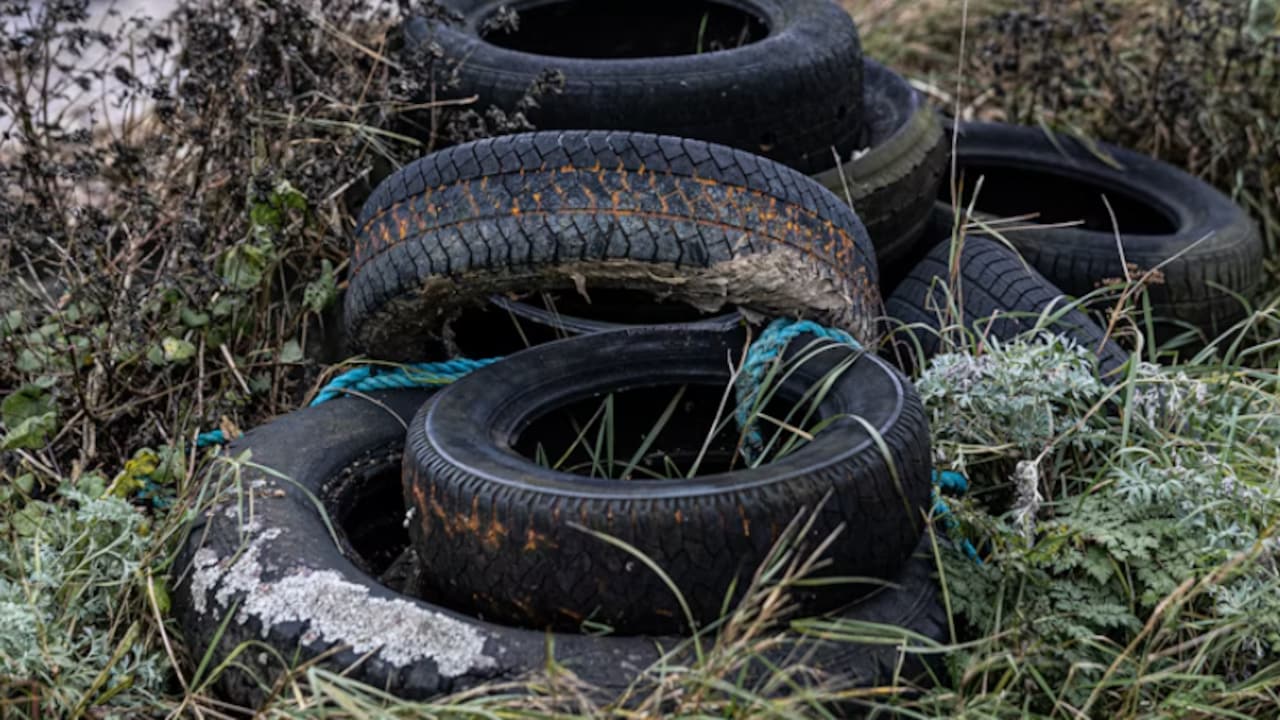
You have mountains of scrap rubber sitting in illegal dumps, and you have rural roads turning into bottomless mud pits every spring. Most people look at those two problems separately. Civil engineers in Maine looked at them and decided to combine them. Back in 1995, crews buried 20,000 discarded tyres beneath a rural gravel road. It sounds like an environmental disaster waiting to happen. Instead, it was an engineering masterclass.
Rural gravel roads in northern states take a brutal beating. Winter brings deep frost penetration, freezing the moisture trapped inside the subgrade soil and pushing the road surface upward. Spring brings the inevitable thaw. That frozen ground melts, turning the subsurface into a soggy, unstable sponge. Heavy trucks roll over these thawed tracks, leaving deep ruts and ruining the infrastructure. Fixing this mess year after year drains municipal budgets.
At the same time, scrap tyres pile up by the millions. They are notoriously difficult to get rid of. They don't break down naturally, they hog massive amounts of landfill space, and they present a constant fire hazard. When whole tyres catch fire, the blazes burn for months and release toxic chemicals into the atmosphere. Landfills hate taking them because they trap air pockets and tend to work their way back up through the cover material.
The Tire Derived Aggregate Solution
Enter Dana N. Humphrey, a civil engineering professor at the University of Maine. He figured out that shredded rubber could solve the freeze-thaw crisis. His team didn't just throw whole tyres into a trench. They processed them into Tire-Derived Aggregate, which means cutting them into uniform chips typically ranging from 12mm to 76mm.
They placed a thick layer of these chips directly beneath the roadbed. Why does rubber work so well here? The physics are simple. Tyre chips act as an exceptional thermal insulator. They prevent frost from penetrating deep into the underlying native soil. Less frost means less destructive expansion during winter and far less mud during the spring thaw.
Drainage is the other half of the equation. Standard gravel soils can hold onto water and lose their load-bearing capacity when saturated. Tyre chips are highly permeable. Water moves freely through the voids between the rubber pieces instead of staying trapped against the road base.
What the Field Tests Proved
When researchers monitored the experimental road sections against adjacent conventional gravel roads, the difference was stark. The rubber-insulated sections showed drastically less frost penetration. They resisted the seasonal breakdown that normally turns rural routes into obstacle courses.
The economic benefit caught the attention of state agencies. A later US Environmental Protection Agency report noted that using shredded rubber for these projects saved millions compared to traditional excavation and stabilization methods. When you don't have to dig out feet of poor soil and haul in expensive imported gravel, costs drop immediately.
Environmental Safety and Common Concerns
Whenever you bury industrial waste beneath the earth, environmental safety comes into question. People worry about leaching chemicals into groundwater. The University of Maine and various environmental agencies studied this thoroughly. When placed above the local water table, tyre chips show a negligible impact on water quality. The heavy metals and organic compounds bound inside vulcanized rubber do not easily migrate into drinking water supplies under these conditions.
Of course, execution matters. Engineers don't just dump rubber chips anywhere. There are strict depth guidelines regarding the water table, and projects require proper compaction so the road surface doesn't shift over time. If you miscalculate the load requirements or use improperly sized shreds, the foundation can become unstable.
This technique isn't just a quirky one-off experiment from the nineties. State departments of transportation across the country now utilize Tire-Derived Aggregate for lightweight fill behind retaining walls, bridge approaches, and subgrade insulation over weak soils.
Look at your local municipal waste strategies. If cities continue to view old tyres purely as garbage to hide away, they miss a massive structural resource. Turning scrap rubber into road armor keeps millions of tyres out of illicit piles and gives rural communities durable roads that survive the worst winters. Stop treating waste like an end point. Design it into the next foundation.