Bhutan has long sold the world a simple story. Rivers carve through steep Himalayan valleys, spinning turbines that power an entire nation while keeping the country carbon negative. It is an appealing narrative. It is also increasingly incomplete.
Winter changes everything here. When temperatures drop and mountain glaciers freeze, river flows shrink dramatically. Hydro capacity plummets by up to 80 percent just as domestic heating and lighting demand triples. To keep the lights on during the coldest months, Bhutan has had to rely on imported electricity from India. Climate change is accelerating glacier melt, making that hydro dependency a risky long-term strategy.
Enter solar power.
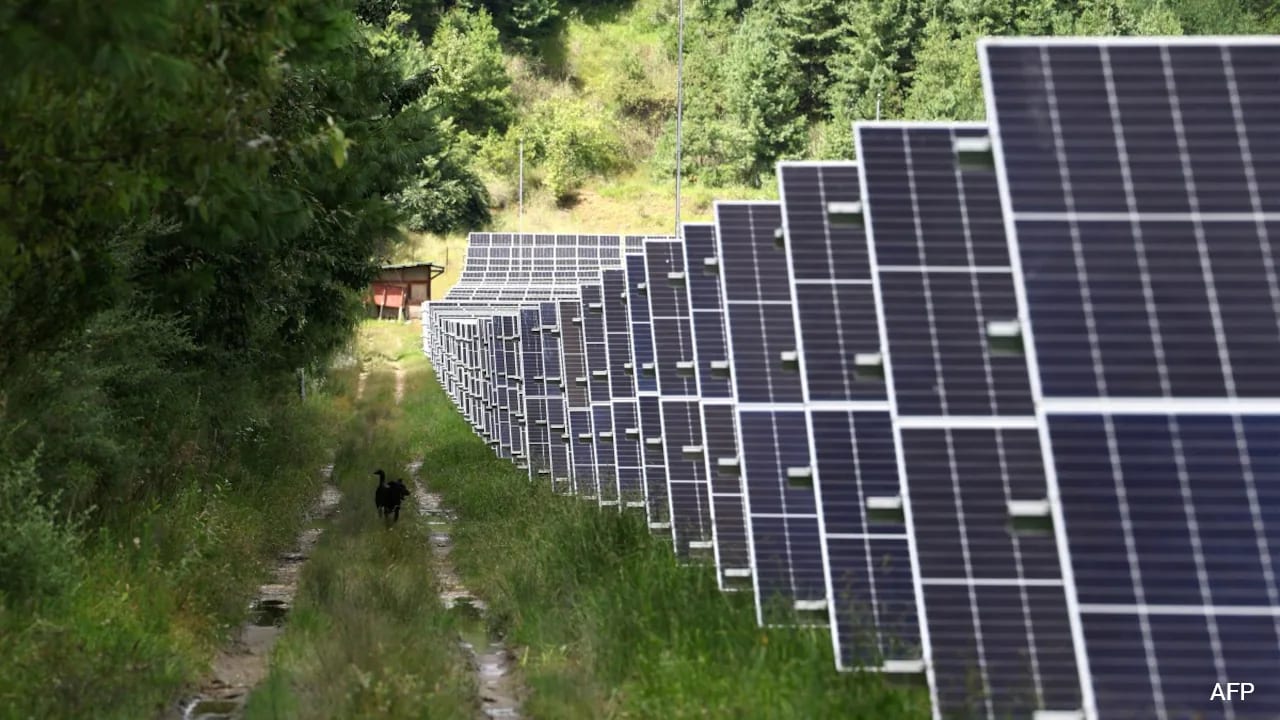
You will now find panels gleaming on former military shooting ranges, government roofs, and ridges around the capital city of Thimphu. The transition is small by global standards, but it marks a profound shift for a country where hydroelectric exports account for up to 15 percent of GDP.
The Winter Crunch and Changing Demands
For years, energy planning in Bhutan followed a straightforward path. The country built massive dams, aiming for 10,000 megawatts of hydro capacity by 2020. That ambitious target stalled. Construction costs soared to roughly $1.5 million per megawatt, presenting a crushing financial burden for a small economy.
At the same time, demand profiles shifted. A domestic construction boom drove baseline energy use upward. More quietly, Bhutan embraced digital infrastructure, including government-backed bitcoin mining operations, while planning the Gelephu Mindfulness City special economic zone to house energy-hungry data centres.
Winter electricity demand skyrocketed from a historical 400 megawatts to 1,500 megawatts. Hydro stations simply cannot keep pace during the dry season. Chhewang Rinzin, managing director of Druk Green Power Corporation, notes that long-term survival requires energy diversification. Glaciers are receding, weather patterns are erratic, and open-ended reliance on a single energy source is no longer viable.
Overcoming Terrain and Financial Hurdles
Building solar farms in the Himalayas is not easy. Bhutan's topography is fiercely vertical. Finding flat ground large enough to scale utility projects requires creativity. Ground-mounted installations chew up scarce flat land, while high altitudes and winding mountain roads make transport a logistical nightmare. Landslides frequently block access routes, delaying equipment delivery.
Financing individual adoption presents another roadblock. Take Om Pradhan, a 79-year-old former minister of trade and industries. He installed rooftop solar to slash his bills and support green energy. The system cost roughly 600,000 ngultrums, equivalent to about $6,300. For most ordinary citizens, that upfront price tag is prohibitive. When local banks offer high interest rates on savings, many residents calculate that leaving cash in an account yields enough returns to cover their standard electricity bills.
Because rooftop economics do not yet pencil out for the average household, the country's national targets rely heavily on utility-scale and commercial projects.
Scaling Up for the Future
The country has revised its long-term vision, targeting 25,000 megawatts of total generation capacity by 2040, with solar slated to provide a fifth of that mix.
Engineers are driving this transformation on the ground. Firms like Norion Renewable Energy are spearheading projects such as the 4.45-megawatt Dechencholing solar farm, following the completion of Sephu, the nation's first major 22-megawatt solar installation. To solve technical shortages, engineering firms partner with the royal De-suung skilling initiative, training hundreds of local volunteers to design, build, and maintain solar infrastructure.
Bhutan is not abandoning its rivers. Hydropower remains the backbone of the economy. But by pairing hydro with solar, the mountain kingdom is finally building an energy grid tough enough to survive winter and unpredictable climate futures.