You finish your morning flat white, toss the paper cup into a standard bin, and assume it goes to a recycling plant. It doesn't. Most takeaway cups end up rotting in landfills because a microscopic waterproof plastic lining prevents standard paper processing.
Australia decided to break that cycle.
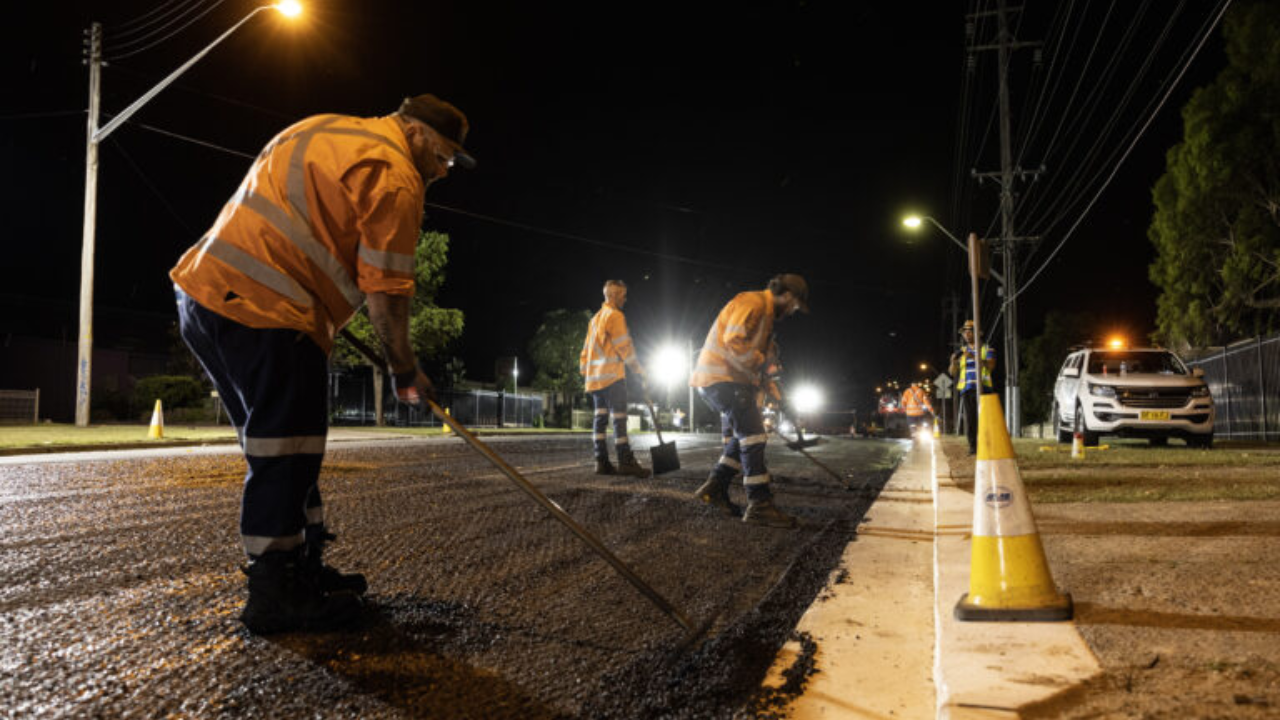
In 2023, engineers in New South Wales did something unusual with morning caffeine waste and discarded alcohol containers. They paved two suburban streets using an asphalt blend packed with 135,000 recycled coffee cups and the equivalent of 1.2 million glass bottles.
The result wasn't a fragile gimmick. It was a structural pavement that cut the carbon footprint of the asphalt by 24 percent while outperforming traditional materials in early durability stress tests.
The Problem With Your Morning Takeaway Habit
Billions of disposable coffee cups get thrown away globally every year. The paper itself is premium, high-grade wood fiber. The catch is the polyethylene or bioplastic film bonded to the inside. Without that layer, hot liquids would dissolve the container in minutes.
Because paper recycling mills cannot easily separate plastic laminate from paper pulp without gumming up their heavy machinery, conventional recycling plants reject the material outright.
Enter Closed Loop Environmental Solutions and their "Simply Cups" program. Instead of trying to force coffee cups through traditional paper streams, they created a dedicated collection network. Businesses, schools, and major retail chains like 7-Eleven installed specialized collection tubes.
Accumulating thousands of cups was only step one. Finding a massive industrial market that could absorb millions of tons of mixed fiber and plastic waste without complaining about structural integrity took years of trial and error.
Building the Road on Jamison and Swallow
The pilot project didn't happen on a quiet driveway. Engineers targeted two high-traffic municipal corridors in the Penrith local government area: roughly 400 meters of Jamison Road in South Penrith and 350 meters of Swallow Drive in Erskine Park.
The resulting proprietary asphalt mix, branded as Pak-Pave, was developed by State Asphalts NSW alongside Closed Loop.
Alongside the 135,000 coffee cups—which represented about 85 percent of all paper cups collected across the Penrith region during the previous year—the recipe threw in heavy-duty ingredients:
- The equivalent of 1.2. million glass stubbies (crushed glass)
- Reclaimed asphalt pavement (RAP)
- Steel furnace slag
When combined, these recycled inputs made up more than 50 percent of the total raw components used to lay the surface.
Before dropping a single ton of the eco-asphalt onto public thoroughfares, builders constructed a strict 50-meter test strip. Heavy transport trucks pounded over the experimental lane repeatedly. Laboratory machines subjected core samples to extreme cyclical flexing until failure.
John Kypreos, director of State Asphalts NSW, noted that the hybrid surface matched or exceeded the performance specs of standard virgin asphalt. It also created a quieter, safer ride for local commuters.
Replacing Crude Oil Imports
One major driver behind the project wasn't just municipal waste diversion. It was supply chain independence.
Before Pak-Pave hit Australian streets, similar high-performance asphalt additives were largely imported from Germany and manufactured using crude oil derivatives. By swapping out petroleum-based bonding agents for recovered cellulose fibers from paper cups, engineers reduced reliance on fossil fuel imports.
The carbon math checks out. Life-cycle assessments conducted by project organizers revealed a direct 24 percent drop in emissions associated with the paving material compared to standard mixes.
Penrith Mayor Tricia Hitchen pointed out the sheer scale of opportunity during the launch. A single local council manages over 1,200 kilometers of roads. If minor suburban streets can routinely absorb hundreds of thousands of single-use cups and millions of glass bottles without structural degradation, municipal infrastructure becomes a massive sponge for urban trash.
Scaling the Circular Economy
True circular economies are notoriously difficult to build because they require a closed loop from waste collection to commercial consumption.
Collecting rubbish is easy. Finding paying buyers for low-grade recycled waste is where most environmental initiatives stall.
The coffee cup road model succeeds because the end product has genuine commercial utility. The asphalt doesn't cost local taxpayers a premium just to feel green; it competes directly with traditional paving materials on price and performance.
Beyond roads, the recovered fiber from the Simply Cups initiative has also found its way into alternative building materials like saveBoard, a structural plywood substitute used in construction.
If you want to see similar projects expand outside New South Wales, stop waiting for municipal governments to magically solve urban clutter. Push local commercial venues, offices, and coffee shops to adopt dedicated collection tubes, and demand that civil contractors bidding on public infrastructure prioritize high-recycled content specifications.
Trash only stays trash if you refuse to pave over it.