Thirty years ago, a catastrophic highway crash on National Route 12 silenced one of Argentina's brightest musical voices. Myriam Alejandra Bianchi, known to millions simply as Gilda, died at just 34 years old when a truck plowed into her tour bus.
You’d expect grief to fade into nostalgic radio airplay. Instead, something far more powerful happened.
Gilda didn't just stay a beloved memory. She transformed into a miracle-working folk saint. Today, tens of thousands of devotees bypass traditional ecclesiastical channels to ask her for divine intercession, proving that Argentina's relationship with faith is deeply personal, wildly unconventional, and entirely driven by the people.
The Rise of a Cumbia Icon Turned Sanctuary Symbol
Before she became an object of quiet prayers and raucous outdoor celebrations, Gilda was the queen of cumbia—a pulsing, infectious fusion of Latin pop and dance rhythms that soundtracked the nation's heartbreaks and celebrations. Born in Buenos Aires in 1961, she didn't follow a sterile pop-star blueprint. She started out as a kindergarten teacher before stepping into smoky dance halls and even singing inside prisons.
She stayed close to her listeners. She answered handwritten letters personally and kept her feet firmly on the ground, even as her hits like "Corazón valiente" and "No me arrepiento de este amor" dominated the charts. That radical accessibility is precisely why her fans refused to let her go after the tragic September morning in 1996.
When her tour bus collided with a truck in Entre Ríos, taking her life alongside her mother, daughter, and several band members, the shockwave was immediate. But grief quickly morphed into devotion. Posthumous albums went double platinum, and the crash site turned into a holy ground.
What You Find at the Shrine of Saint Gilda
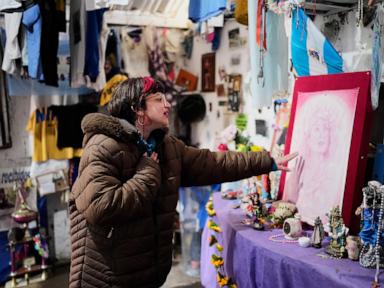
If you drive two hours north from Buenos Aires into the grassy plains of Ceibas, you'll see what grassroots faith actually looks like. The rusted remains of the original tour bus sit encased in a glass-and-metal memorial, swallowed whole by mountains of stuffed animals, burning votive candles, and colorful flowers.
The surrounding chapel tells a story of everyday miracles answered. It's packed with tangible proof of human desperation and gratitude:
- Wedding dresses left by women who finally found love after praying at the site.
- Athletic jerseys and championship trophies offered by players whose careers took off.
- Discarded crutches left behind by people who miraculously walked again.
- Police uniforms from officers who earned hard-fought promotions through her blessing.
Devotees wear T-shirts emblazoned with her face—usually framed by her signature flower crown and shimmering blue dress—and whisper requests for healing, protection, and financial survival.
Why the Catholic Church Looks the Other Way
The Vatican doesn't hand out canonization papers to cumbia singers. Like other folk saints embedded in Argentine culture—such as the desert wanderer Difunta Correa—Gilda exists entirely outside official church recognition.
Yet, local clergy tread carefully. Rather than condemning the massive gatherings, the church tries to gently steer attention back upward. During anniversary masses held right at her shrine, priests celebrate the liturgy without mentioning her status as a folk saint, quietly reminding the crowds to keep God at the center of their worship.
For the average believer, there's zero contradiction here. You can be a devout Roman Catholic on Sunday and ask Gilda to protect your vocal cords or watch over your family on Monday. As researcher Cleopatra Barrios points out, these popular saints offer an everyday companionship that feels immediate and lived-in. The people decide who gets to be holy long before any paperwork gets signed in Rome.
Stop waiting for institutions to validate what communities already feel in their bones. Culture is built from the bottom up.