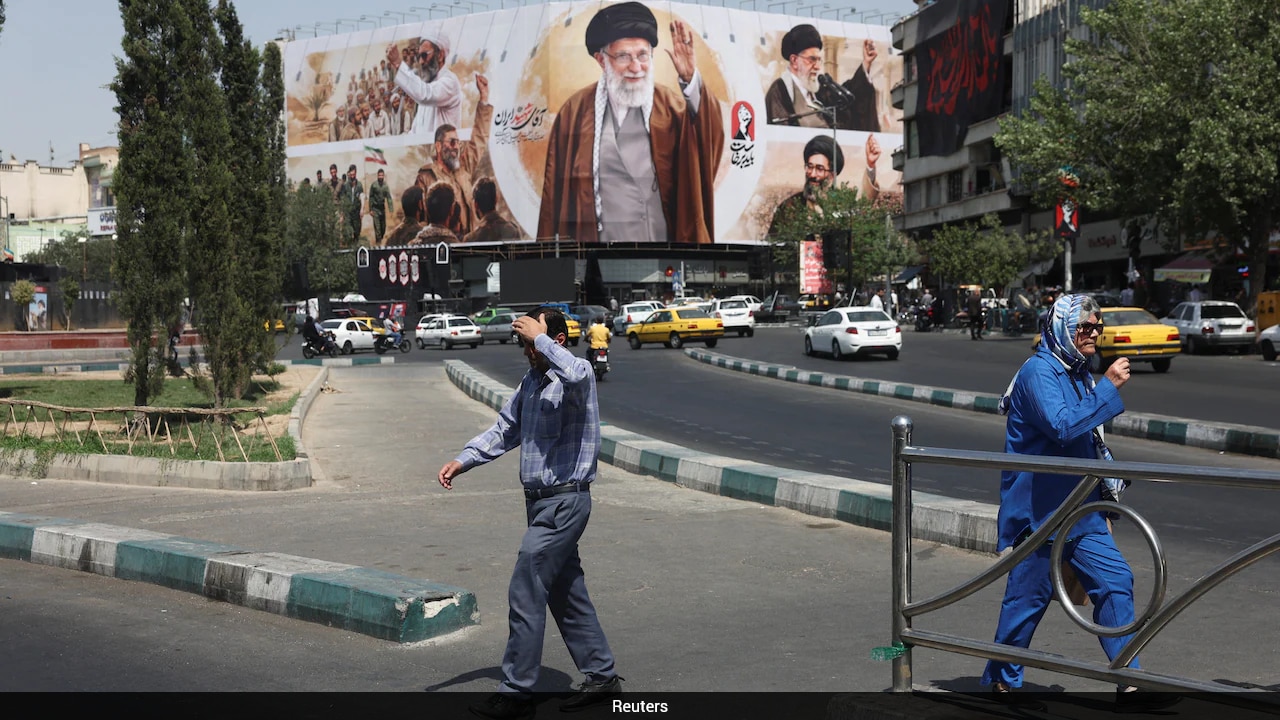
The illusion of a quick, clean military victory has shattered. For months, the official line from Washington hinted at a swift resolution, a decisive display of American muscle that would force Tehran to its knees and secure the global energy supply.
That theory is dead.
The latest Reuters/Ipsos data shows a massive shift in how the public views this conflict. An overwhelming 79% of Americans now expect the US Iran war to drag on for an extended period, a staggering jump from the 65% who felt that way in late March. Only 18% of the country still clings to the belief that this war will wrap up in a matter of weeks.
This is not just a statistical shift. It is a deep, collective realization that the United States is once again wading into a long-term conflict in the Middle East. People have seen this movie before, and they know exactly how it ends.
The Broken Ceasefire and the Illusion of De-escalation
Just weeks ago, there was a glimmer of hope. An interim agreement temporarily cooled the temperature, reopening the strategic Strait of Hormuz and halting active hostilities while diplomats prepared for a 60-day negotiation window.
It did not last.
The ceasefire fell apart with stunning speed. Following renewed drone and missile exchanges, President Donald Trump declared the temporary truce dead and reinstated a strict naval blockade on Iranian shipping in the Persian Gulf. To make matters more complicated, the administration announced a plan to recoup 20% on all commercial cargo transiting the strait, effectively treating a global shipping bottleneck as a toll road to fund the war effort.
Iran responded by declaring the Strait of Hormuz closed.
When you look at the mechanics of this escalation, it is easy to see why the American public is preparing for the long haul. This is not a conflict that can be solved with a single surgical strike. The strategic reality of the Persian Gulf means that any attempt to enforce a blockade turns into a dangerous game of cat-and-mouse. Sea mines, fast-attack craft, and mobile missile batteries along Iran's rugged coastline make the waterway incredibly difficult to secure.
Why Public Approval is Cratered
Only 37% of Americans approve of the renewed military strikes that began on June 26. That is a remarkably low number for a nation actively engaged in combat operations overseas. Usually, a country rallies behind its commander-in-chief when the shooting starts. Not this time.
The skepticism is rooted in two distinct places.
The Financial Toll at the Pump
Americans are feeling the squeeze. Sixty percent of poll respondents expect gasoline prices to worsen significantly over the next year because of this war. Half of the country believes the entire conflict has simply not been worth the cost.
When you struggle to fill your truck just to get to work, geopolitical posturing in the Gulf feels incredibly distant. The administration argues that securing the shipping lanes is vital for long-term economic stability, but the immediate result is inflation. The political benefits of previous tax cuts have been completely wiped out by the rising cost of living.
The Memory of Endless Wars
The shadow of Iraq and Afghanistan hangs heavy over this entire operation. The average American is highly skeptical of "mission creep." We were told those conflicts would be quick, too. Instead, they lasted decades, cost trillions of dollars, and ended in chaotic retreats.
When people look at Iran—a country with three times the population of Iraq and a highly defensible, mountainous geography—they do not see an easy win. They see a quagmire. They see another generation of soldiers deployed to a desert with no clear exit strategy.
The Gathering Political Storm in Washington
The timing of this escalation could not be worse for the Republican party. With the crucial November midterm elections rapidly approaching, the party in power is facing a massive political liability.
Donald Trump's approval ratings have hovered near historic lows since the shooting started. Historically, wartime presidents use national security to unite their base and pull in independents. Today, the opposite is happening.
The strategic calculations are shifting rapidly:
- The House is at Risk: Internal polling suggests the Republican House majority is in serious jeopardy as moderate voters flee over economic concerns.
- The Senate is Slipping: Even reliable red states are showing signs of vulnerability as voters react to the prospect of sustained energy price hikes.
- A Fractured Base: Even within the president's own coalition, there is deep unease. Younger voters who supported his populist agenda are highly anti-war, creating a widening rift between the grassroots base and Washington's foreign policy establishment.
If the administration cannot find a diplomatic off-ramp soon, the electoral punishment in November could be severe.
What the Foreign Policy Establishment Gets Wrong
The fundamental mistake Washington decision-makers continue to make is assuming that economic pressure and localized military pressure will force a rapid capitulation. They miscalculate Iranian resolve.
Tehran views this conflict as existential. The regime has spent decades preparing for a confrontation in the Gulf, building an asymmetric military doctrine designed specifically to counter US naval superiority. They do not need to win a traditional fleet battle. They just need to make the cost of occupying and patrolling the region too high for the American public to tolerate.
By closing the Strait of Hormuz and launching targeted drone strikes, they are hitting the global economy directly. They know that inflation is the Achilles' heel of any Western democracy.
The Path Forward
The United States has a choice to make, and it has to make it quickly.
Continuing the current strategy of blockades and retaliatory strikes guarantees a multi-year war of attrition. The public knows this, which is why 79% are bracing for a prolonged fight.
If the administration wants to avoid a complete political and economic disaster, it needs to stop looking for a cinematic victory that is never going to happen. The only realistic path out of this mess is a return to serious, pragmatic diplomacy. Washington must swallow its pride, offer a viable off-ramp that addresses regional security, and lower the energy tax currently crushing American families.
Otherwise, we are looking at another endless war. And this time, we cannot say we did not see it coming.